
How to Structure Stories Using Blake Snyder’s Save The Cat Method

How to Structure Stories Using Blake Snyder’s Save The Cat Method
In 2005, screenwriter Blake Snyder published Save the Cat! The Last Book on Screenwriting You’ll Ever Need, which influenced story outlining across multiple mediums. Although the title focused on Hollywood screenplays, the mechanics spread to novelists, television writers, playwrights, and game designers. Snyder's method uses a framework of 15 distinct structural beats that trace plot progression and internal character growth from the opening image to the closing frame.
Writing a compelling narrative often feels like wandering through a dense forest without a map. Creators struggle with pacing, second-act sagging, and emotional payoffs that fall flat. By breaking a story down into specific narrative checkpoints, writers gain a reliable skeleton that supports character growth and plot momentum. Whether you are drafting a fast-paced thriller or an epic fantasy novel, understanding how to apply this foundational framework can save months of painful structural rewrites.
The Origins and Evolution of the Method
Blake Snyder developed his approach after selling multiple spec scripts to major Hollywood studios. He noticed that successful commercial films shared remarkably similar structural timing, hitting specific emotional notes and plot twists at predictable intervals. He codified these observations into a strict yet flexible formula. He argued that audiences crave a balance of familiar structural beats mixed with fresh creative execution.
Over the years, the method expanded far beyond cinema. Authors adapted the system for long-form fiction, most notably through specialized guides like Jessica Brody's work on adapting the framework for novelists, detailed on the official Save the Cat! website. Writers across the globe began treating the 15-beat sequence as a universal story engine.
Understanding the Anatomy of a Beat
Before diving into the specific checkpoints, it helps to clarify what a beat actually represents in this context. A beat is a major moment or turning point in a story. A beat sheet is simply an ordered outline made from those individual moments.
Each major beat can span multiple scenes and smaller story events. Writers typically outline the broad structural markers first, ensuring the narrative hits every required emotional and plot requirement, before zooming in to add scene-level details. This top-down approach prevents the common trap of getting bogged down in dialogue or description before the overarching narrative arc is stable.
The 15 Structural Beats Explained
The standard structural sequence consists of 15 specific moments. While early iterations of the method tied these moments to strict page counts in a screenplay, modern practitioners focus primarily on story function and sequence rather than rigid numerical rules.
The sequence begins with the Opening Image. This serves as a visual snapshot of the protagonist's starting state before the adventure begins, acting as a baseline so the audience can measure how much the character changes by the end.
Next comes the Theme Stated. Early in the story, usually during a casual conversation, someone mentions a truth or a life lesson that the protagonist desperately needs to learn. The main character will reject or fail to understand this theme until the climax of the story.
The Set-Up occupies the first ten percent of the narrative. During this phase, the writer shows the protagonist's current flawed life, introduces supporting characters, and highlights what is missing.
The Catalyst arrives to disrupt the status quo. This is an inciting incident that shatters the protagonist's ordinary world. An unexpected letter, a sudden job loss, or a strange visitor forces the character out of their comfort zone.
Following the catalyst, the protagonist enters the Debate phase. This is the period of hesitation where the character asks, "What should I do?" They resist the call to adventure because change is terrifying.
Once the decision is made, the story hits Break into Two. The protagonist makes an active choice to leave the old world behind and step into the upside-down, unfamiliar world of Act Two.
Exploring the Middle of the Story
With the protagonist firmly planted in the new environment, the narrative introduces the B Story. This secondary plotline often involves a love interest, a mentor, or a loyal friend. The B Story carries the thematic weight of the narrative, giving the protagonist a safe space to discuss their internal struggles.
Then comes the Fun and Games. This section delivers the promise of the premise. It is the part of the story that audiences buy tickets or books to see. If the premise is about a knight fighting a dragon, this is where the knight explores the dragon's lair, tries out different weapons, and encounters early comedic or action-packed obstacles.
Right in the middle of the narrative sits the Midpoint. Here, the stakes are raised. The protagonist experiences a false victory or a false defeat. The fun and games are over, and the clock starts ticking toward the climax.
As the pressure mounts, the Bad Guys Close In. Internal doubts and external antagonists begin to squeeze the protagonist. Pressures compound, and the allies built in the B Story might start to fracture under the stress.
This relentless pressure culminates in All Is Lost. The exact opposite of the midpoint victory occurs. Someone important might die, a mentor figure departs, or a secret is exposed. This moment represents the death of the old self, paving the way for true transformation.
Immediately following that crushing defeat is the Dark Night of the Soul. The protagonist wallows in despair. They realize their old ways of thinking are completely dead, but they do not yet possess the new wisdom needed to survive. This is the lowest emotional point of the entire narrative.
Toward the Climax and Resolution
Out of the ashes of despair comes Break into Three. Inspired by a clue from the B Story or a realization of the Theme Stated, the protagonist synthesizes lessons learned throughout the narrative. They form a new plan to tackle the antagonist or solve the central problem.
The Finale represents the final confrontation. The protagonist applies the lessons learned, purges the remaining flaws, and triumphs over the antagonist. This sequence proves that the character has fundamentally changed.
Finally, the story concludes with the Final Image. This visual snapshot mirrors the Opening Image while demonstrating a clear contrast. If the opening image showed a lonely character in a dreary office, the final image shows that same character surrounded by loved ones in a lively setting, confirming that the internal arc is complete.
Adapting the Framework for Different Mediums
While the beat sheet originated in Hollywood, its flexibility makes it useful for anyone working with narrative structure. Authors writing epic fantasy or contemporary romance often map these 15 beats across chapters rather than scenes. To see how these storytelling structures break down across different formats, you can review resources provided on the Save the Cat! Beat Sheets overview.
When shifting from film to prose, pacing adjustments are often necessary. Novels allow for deeper internal monologues during the Debate and Dark Night of the Soul phases, whereas screenplays must convey these emotional shifts through action and dialogue. Despite these medium differences, the underlying human desires and fears remain identical.
Common Pitfalls When Using Beat Sheets
Many writers run into trouble by treating the 15 beats as an unyielding cage rather than a flexible guide. If you force a plot point into a beat prematurely, the story can feel mechanical and contrived.
Another frequent mistake involves neglecting the B Story. Writers often focus entirely on the external plot mechanics, ignoring the emotional relationships that give the plot its resonance. Without a strong B Story carrying the thematic weight, the middle of the book can feel hollow, no matter how many explosions or plot twists you include.
Key Takeaways
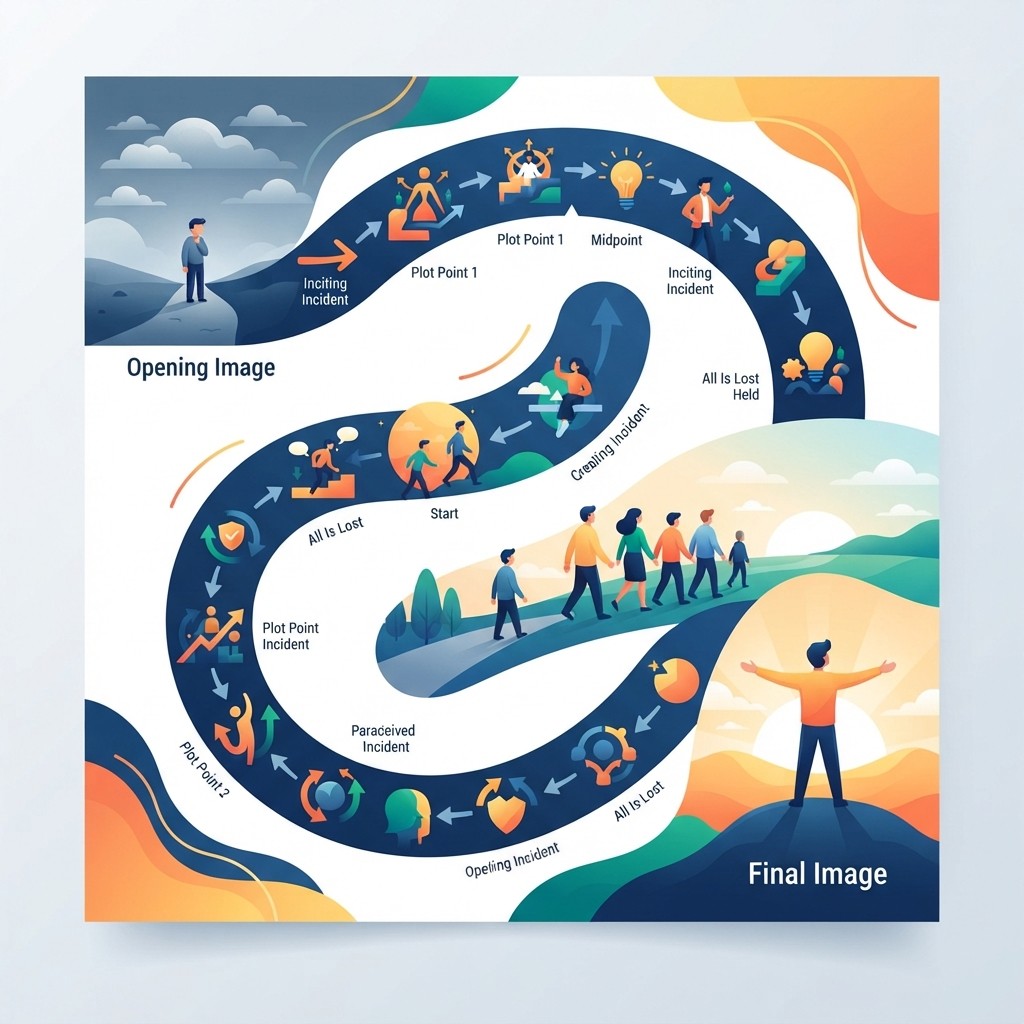
The framework relies on 15 distinct structural moments, starting with the Opening Image and concluding with the Final Image.
A beat sheet provides a reliable outline of major story moments, helping writers maintain pacing and emotional momentum.
The method applies across multiple creative mediums, including novels, screenplays, and games.
The middle of the story balances the entertainment of the Fun and Games section with the rising stakes of the Midpoint and All Is Lost moments.
The Final Image should serve as a symbolic or visual contrast to the Opening Image, proving the protagonist has transformed.
Frequently Asked Questions
What is the Save the Cat method?
It is a storytelling and outlining framework created by Blake Snyder in his 2005 book Save the Cat! The Last Book on Screenwriting You’ll Ever Need that uses 15 distinct structural beats to track plot progression and character transformation.
How many beats are in a standard beat sheet?
The framework consists of exactly 15 beats, beginning with the Opening Image and ending with the Final Image, covering every major narrative turning point.
Can this method be used for writing novels?
Yes, authors routinely adapt the 15-beat framework for fiction and long-form prose, adapting the pacing across chapters and focusing heavily on internal character arcs.
What is the Fun and Games beat?
This section represents the promise of the premise, delivering the core situations, conflicts, and entertainment that audiences expect from the genre and logline.
Why is the Midpoint important?
The Midpoint serves as a central pivot in the story where a false victory or false defeat occurs, raising the stakes and shifting the narrative from reaction to proactive pursuit.
Is the Save the Cat beat sheet mandatory for all writers?
No outline method is mandatory. Many writers use it as a flexible diagnostic tool to fix pacing issues or structure a messy draft rather than a strict drafting rule.
Ultimately, whether you are outlining your very first novel or troubleshooting a stalled screenplay, the Save the Cat! framework offers a dependable map for navigating the complex terrain of storytelling. By keeping the core structural beats in mind, you can ensure that your narrative maintains both emotional resonance and relentless forward momentum from start to finish.